EVERGREEN
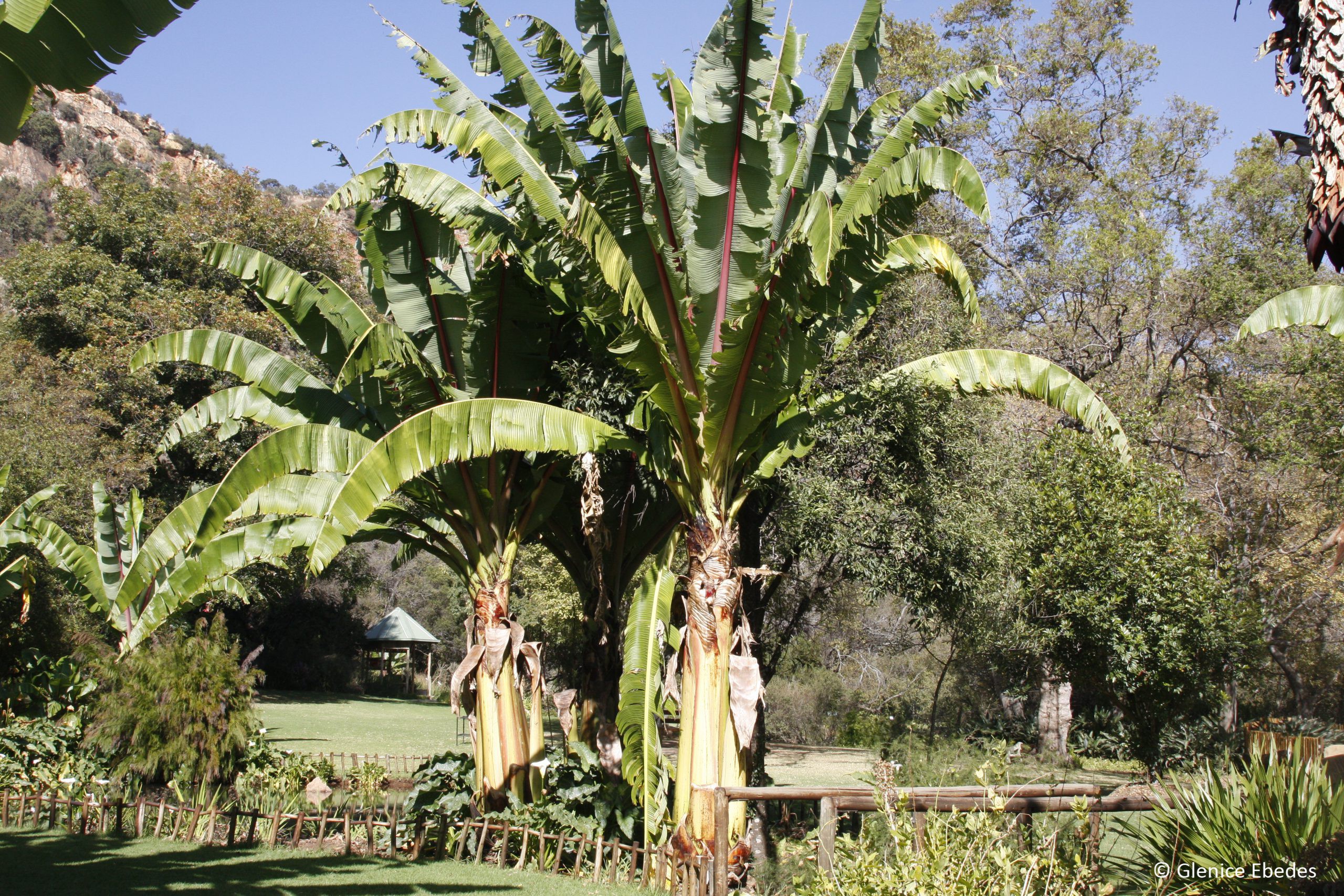
Ensete ventricosum
Family: Musaceae (Banana family)
Common names: African Wild Banana (E); Afrika-wildepiesang (A); Matella (SS);
Native to: Southern Africa
Palm/Cycad, Tree


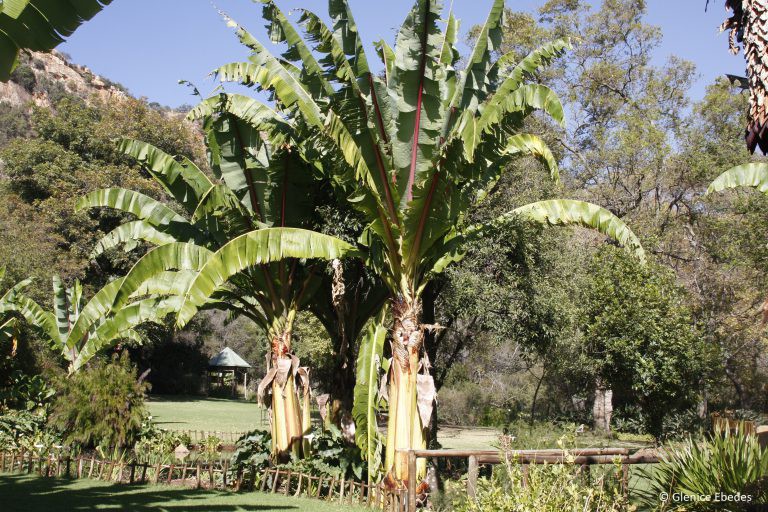
Ensete ventricosum
FULL SUN
SEMI-SHADE
SEMI FROST HARDY
FLOWER COLOUR:
AVERAGE SIZE:
6m x 4m
FLOWERING TIME:
J F M A M J J A S O N D
FRUITING TIME:
J F M A M J J A S O N D
Ensete ventricosum
DESCRIPTION
A stout tree, fleshy stem crowned with banana-like leaves which have a prominent central red vein on their undersides. Cream flowers are enclosed in maroon bracts, making a showy bunch up to 1.5m long. The fruits look like bananas but contain masses of hard black seeds resembling dried peas.


4 responses
Hi Klaus
Thanks for visiting Plantbook and for sharing your knowledge and experience with this species.
It’s very interesting to hear about traditional uses of our indigenous plants.
Please share more information on other species that you’re aware of.
Flourish!
Glenice
This is a staple food in parts of Ethiopia, probably a native there much more so than in SA. The common name there is Enset. The edible part is the starch which is scraped out of the central vein of the leaves, then fermented and wrapped in the leaves for storage. Buried in the ground it can last for months. For consumption, one way is to prepare it similar to pap, but the result is more sticky and can be formed into balls. A very essential food security crop for small-scale farmers with high proportions of subsistence agriculture (living off their family farms) and in areas without electricity and cold storage. As a staple, it is more reliable than cereal crops in areas with variable rainfall (food security). Harvest usually starts when the plant is about 7 years old and can be done continuously for several years. Propagation is done with the suckers emerging from the rootstock of the mother plant. It is also better than cereals in for preventing soil erosion and maintaining soil fertility because it does not require ploughing and thrives with organic manure and compost.
Hi
Thanks for visiting Plantbook.
Although this is a member of the banana family, I don’t have any knowledge of the edible nature of this species.
It’s always best to consult with a number of reputable sources before trying to consume it.
Flourish!
Glenice
I believe the seeds, pith of the stems and roots are edible. It this correct